Health and safety audit checklist: what to cover and how to prepare

A health and safety audit is a systematic review of an organisation’s H&S management system, practices and documentation against defined standards or legal requirements. Unlike a site inspection — which typically focuses on observable physical conditions — an audit examines whether the underlying management processes are sound: whether risk assessments are current, training records are complete, incidents are being investigated and corrective actions are being closed out.
This checklist covers the eight core areas a health and safety audit should address, along with the specific evidence an auditor should expect to find.
What is a health and safety audit checklist?
A health and safety audit checklist is a structured tool used to guide the audit process and ensure consistent coverage across audit areas. It sets out the specific questions to ask, records to review and observations to make in each area. Without a checklist, audits risk being inconsistent between auditors, incomplete in coverage and difficult to repeat at a later date in a comparable way.
A good H&S audit checklist is not a tick-box exercise. Each item should prompt genuine investigation: not ‘do you have a risk assessment policy?’ but ‘show me the risk assessments for your three highest-risk activities and tell me when they were last reviewed.’
Health and safety audit checklist: eight areas to cover
1. Documentation and policies
- Is there a written health and safety policy that has been reviewed within the last 12 months?
- Has the policy been communicated to all employees, including those who started recently?
- Are safe working procedures documented and accessible to the workers who need them?
- Are COSHH assessments in place for all hazardous substances used on site?
2. Risk assessments
- Are risk assessments in place for all significant hazards identified in the H&S policy?
- Have risk assessments been reviewed following any change in activity, equipment or personnel?
- Do risk assessments name the responsible person and review date?
- Are workers aware of the risk assessments that apply to their work?
3. Incident records
- Is an accident book or digital incident log maintained and accessible?
- Are all incidents — including near misses — being recorded?
- Have incidents been investigated and root causes identified?
- Is there evidence of corrective actions being completed and signed off?
- Are RIDDOR-reportable incidents being submitted to the HSE within the required time limits?
4. Training records
- Is there a documented training matrix identifying required competencies by role?
- Do training records exist for all employees, including H&S induction, first aid, manual handling and any role-specific requirements?
- Are certification expiry dates being tracked and renewals managed proactively?
- Is there evidence that training has been received and understood (e.g. signed induction records, assessment results)?
5. Equipment inspections and maintenance
- Are inspection schedules in place for all plant, equipment and PPE?
- Is there a documented inspection record for each piece of equipment?
- Are defects being recorded, escalated and resolved within defined timeframes?
- Is statutory inspection evidence current for LOLER (lifting equipment), PSSR (pressure systems) and any other applicable regulations?
6. Emergency procedures
- Is an emergency response plan documented and current?
- Are evacuation procedures posted and communicated to all personnel, including visitors and contractors?
- Are fire risk assessments in place and up to date?
- Have emergency drills been conducted within the past 12 months and outcomes recorded?
- Are first aid provisions adequate for the site’s workforce and risk level?
7. Permits to work
- Is there a permit to work system in place for high-risk activities?
- Are permits being completed and signed correctly before work begins?
- Are completed permits being retained as records?
- Are workers and supervisors trained in the permit to work procedure?
8. Contractor management and COSHH
- Is there a documented process for onboarding and monitoring contractors?
- Are contractor health and safety competency records held on file?
- Are contractors inducted before starting work on site?
- Are COSHH assessments available for all substances used by contractors on the premises?
How to conduct a health and safety audit
An effective H&S audit combines three evidence sources:
- Document review — review policies, risk assessments, training records, incident logs, permits and inspection records. Look for completeness, currency and evidence of review.
- Observation — walk the workplace. Are the controls described in the risk assessments actually in place? Is PPE being used correctly? Are work areas clean and access routes clear?
- Interviews — ask workers and supervisors about how procedures work in practice. Discrepancies between what the documents say and what workers describe are significant findings.
Audit findings should be graded by severity (critical, major, minor, observation), assigned to a responsible owner with a deadline and tracked through to close-out. An audit that produces findings but does not drive corrective action has limited value.
Conducting audits with Work Wallet
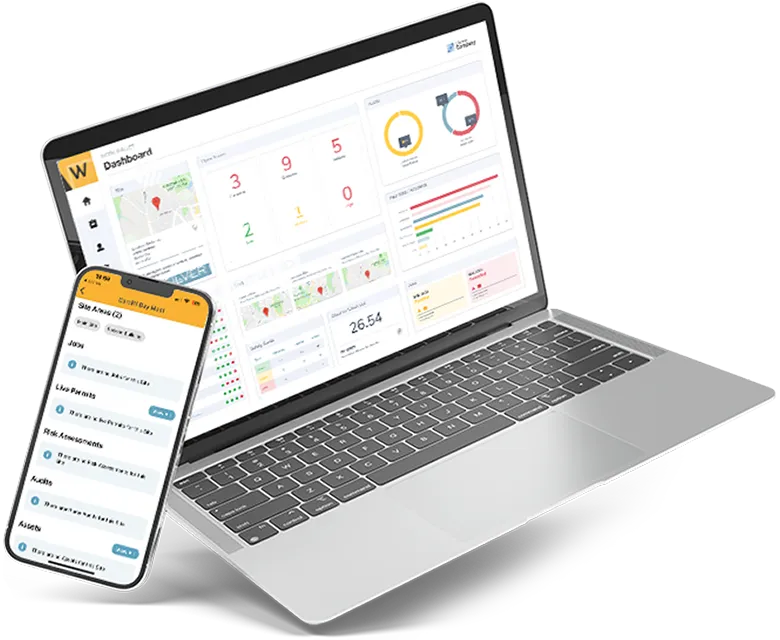
Work Wallet’s Audits+ module enables auditors to complete health and safety audits on a mobile device, using configurable checklists that match the organisation’s audit programme. Findings are logged in real time, assigned to responsible owners and tracked through to close-out — all within the same platform as the organisation’s risk assessments, incident records and training data.
This matters because audit findings should be assessed in the context of other safety data. A recurring corrective action that has been closed out on paper but never completed in practice is visible in an integrated system in a way it would not be in a standalone audit tool.
Frequently asked questions about health and safety audit checklists
What is a health and safety audit checklist?
A health and safety audit checklist is a structured guide used during an H&S audit to ensure consistent coverage of all relevant areas — from risk assessments and training records to permits, equipment inspections and emergency procedures.
How do you conduct a health and safety audit?
An H&S audit involves three activities: reviewing documentation, observing workplace conditions and interviewing workers and managers. Findings are graded by severity, assigned to owners and tracked through to close-out.
What should be included in a health and safety audit?
A thorough H&S audit should cover: policies and documentation, risk assessments, incident records, training records, equipment inspection records, emergency procedures, permits to work and contractor management. The depth of review in each area should reflect the organisation’s risk profile.
An audit is only as good as what happens next
The purpose of a health and safety audit is not to produce a report — it is to drive improvement. Audits that find the same issues cycle after cycle are not auditing effectively; they are documenting a recurring problem. The organisations that extract the most value from their audit programmes use findings to update risk assessments, refresh training, close permit gaps and inform the next audit scope. Work Wallet’s corrective action tracking ensures that audit findings are closed out, not filed away.
Get Started
Join the 10,000+ companies that grow with Work Wallet every day - trusted to simplify operations, boost safety, and keep teams connected.