Mandatory occurrence reporting: a comprehensive guide

Mandatory Occurrence Reporting (MOR) is a key regulatory requirement introduced under the Building Safety Act 2022 and its associated secondary regulations (notably The Building (Higher-Risk Buildings Procedures) (England) Regulations 2023). Its purpose is to strengthen safety oversight in higher-risk buildings (HRBs) by mandating that duty holders capture, report, and act on structural or fire safety risks throughout a building’s lifecycle.
This article explains:
- what mandatory occurrence reporting is,
- who is responsible,
- what qualifies as a “safety occurrence,”
- the obligations for reporting to the Building Safety Regulator,
- how it fits into the wider regulatory safety framework, and
- how digital tools can help organisations comply efficiently.
What Is Mandatory Occurrence Reporting?
Mandatory Occurrence Reporting (MOR) requires that principal duty holders establish, maintain, and enforce a system to report and manage safety occurrences affecting structural integrity or fire safety in HRBs. These occurrences must be reported during both design, construction, and operational phases to prevent serious risks to people and property.
In essence, MOR is about ensuring that risks are surfaced at the earliest opportunity and that there is accountability and traceability in how they are handled.
Who Is Responsible?
The duty to establish and maintain an MOR system falls primarily on principal duty holders and, after occupancy, Accountable Persons:
- Principal duty holders include the Principal Contractor (or Sole Contractor) and the Principal Designer (or Sole Designer). They must ensure that the system is in place before work begins and remains operational throughout the construction process.
- Once the building is occupied, the Accountable Person takes over maintaining the MOR system during the operation phase.
These roles must ensure that all parties involved – designers, contractors, site personnel, and visitors – understand their responsibilities in reporting occurrences.
What Qualifies as a Safety Occurrence?
A safety occurrence is any incident, defect, or design flaw with potential to compromise a building’s structural integrity or fire safety. This includes:
- Design flaws that, if implemented, might give rise to serious risks.
- On-site issues discovered during construction (e.g. deviations, latent defects) that could pose risks.
- Operational phase concerns affecting fire safety or structural performance.
Duty holders are also required to conduct regular inspections during construction to detect potential occurrences proactively.
Reporting to the Building Safety Regulator (BSR)
When a safety occurrence is identified, the duty holder must make a written report to the Building Safety Regulator (BSR) under Regulation 33 of the 2023 Regulations.
Timing & Contents of Reporting
- The report must be submitted within 10 days of the occurrence being discovered.
- Required details include:
- Date and time of the occurrence
- Site address / location
- Name and contact of the reporting duty holder
- Description of the risk/incident and remedial measures taken
Failure to report a qualifying occurrence can result in fines and enforcement actions against the duty holder.
How MOR Fits Into the Broader Safety Regime
Mandatory Occurrence Reporting complements existing safety reporting frameworks such as RIDDOR (Reporting of Injuries, Diseases and Dangerous Occurrences). It embeds within the new building safety regulatory regime by:
- Aligning with Gateway 2 and Gateway 3 approval processes, which require that reporting plans be submitted as part of approval applications.
- Integrating with change control processes, so any design or construction changes reflect in the MOR system.
- Supporting the golden thread of information by ensuring safety records are digitally logged, accessible, and auditable.
Ultimately, MOR is part of fostering a proactive safety culture and ensuring continuous accountability across design, construction, and operation phases.
Benefits of Digital Solutions for MOR Compliance
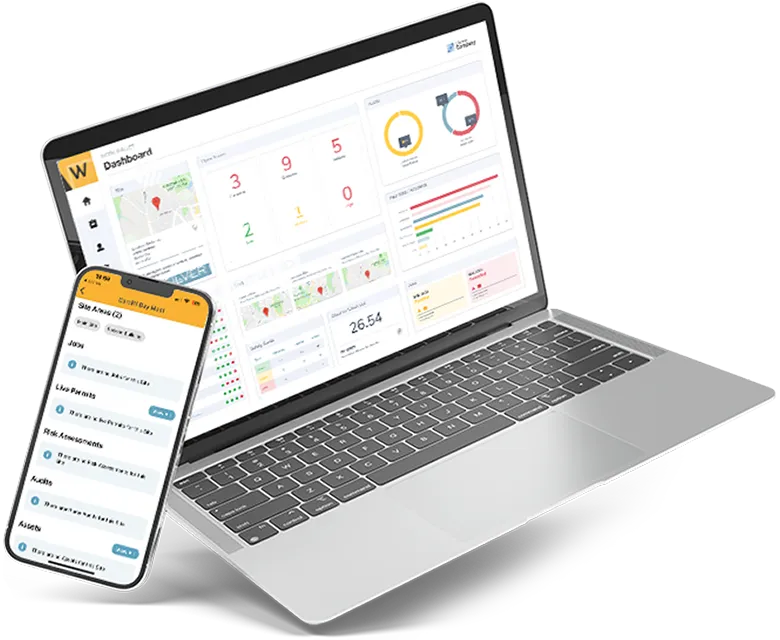
Given the complexity and legal exactitude required for MOR, digital platforms can be critical in ensuring accuracy, consistency, and timeliness. Work Wallet positions its platform to help organisations meet these standards by:
- Providing templates aligned to reporting requirements, reducing risk of missing key information
- Enabling real-time data capture and stakeholder notifications
- Centralising logs and documentation to support the golden thread approach
- Facilitating collaboration across duty holders in a shared environment for consistency and clarity
In short, a well-implemented digital solution can significantly reduce the administrative burden and help ensure full compliance with MOR requirements.
Action Steps & Compliance Checklist
To ensure your organisation is prepared for mandatory occurrence reporting, consider the following checklist:
- Identify duty holders (designers, contractors, Accountable Person) and assign MOR responsibilities.
- Design and document a clear MOR process before construction begins.
- Educate all parties (workers, subcontractors, visitors) on their role in detecting and reporting occurrences.
- Schedule regular inspections during construction to proactively detect issues.
- Adopt a digital solution to manage incident capture, reporting, logging, and stakeholder communication.
- Submit reports to the BSR within 10 days of discovery, with all required details.
- Integrate MOR reporting into change control, gateway submissions, and the building’s golden thread record.
- Audit and review your MOR system periodically to ensure effectiveness and compliance.
Conclusion
Mandatory Occurrence Reporting represents a significant evolution in how building safety risks are managed in higher-risk buildings in England. It demands a rigorous, traceable, and transparent system spanning design, construction, and operation. By understanding the regulatory requirements, defining roles and responsibilities, and leveraging appropriate digital tools, organisations can build compliance into everyday workflows – enhancing safety, accountability, and resilience.
Get Started
Join the 10,000+ companies that grow with Work Wallet every day - trusted to simplify operations, boost safety, and keep teams connected.