The permit to work procedure: a step-by-step guide

A permit to work procedure is the formal sequence of steps that controls who can carry out high-risk work, under what conditions and with what precautions in place. It is a documented, authorised process – not just a form. The permit is the physical or digital record of that process, but the procedure is what gives it its safety function.
This guide covers the six stages of a standard permit to work procedure, the common types of work that require permits and the key questions every permit should answer.
Why a permit to work procedure exists
High-risk tasks – those involving confined spaces, energised equipment, hot work, work at height or exposure to hazardous substances – present risks that standard operating procedures and risk assessments alone cannot adequately control. A permit to work procedure adds a formal gate: no work begins until a competent person has assessed the specific hazards of that particular task, on that particular day, in that particular location, and authorised it under controlled conditions.
The permit also creates a physical record that the hazard assessment was completed and the controls were in place at the time the work began. This is significant for both incident prevention and legal accountability.
The six stages of a permit to work procedure
Stage 1: Identification of the work
The responsible person – usually a supervisor, site manager or contract manager – identifies that a task requires a permit. The decision is based on the nature of the work and the hazards involved. Common triggers include entry into a confined space, work on live electrical systems, hot work near flammable materials or isolation of safety-critical equipment.
Stage 2: Hazard assessment
Before a permit can be issued, the specific hazards of the task must be assessed. This is not a generic risk assessment – it is a site-specific, task-specific assessment of the conditions that will exist when the work is carried out. The assessor must consider the people doing the work, the equipment involved, the environment and any other activities happening in the vicinity.
The output of this stage determines what precautions and controls the permit will specify.
Stage 3: Permit application and approval
The permit applicant (typically the person responsible for the work party) completes the permit document. This includes describing the work to be done, identifying the hazards, specifying the control measures to be applied (isolation, PPE, atmospheric monitoring, standby personnel etc.) and nominating the persons who will carry out the work.
The permit is then submitted for approval to the permit issuer – a competent person with the authority to sanction the work. The issuer checks that the hazard assessment is complete and accurate, the controls are adequate and the applicant understands them. The issuer signs the permit and specifies the time window within which the work is authorised.
Stage 4: Execution of the work
The work party receives a copy of the permit before starting. The permit holder (the person in charge of the work party on site) is responsible for ensuring all specified controls are in place before the work begins and are maintained throughout. Typically, a copy of the permit must be displayed at the work location for the duration of the task.
No deviations from the permit conditions are permitted without the work being stopped, the permit suspended and a revised assessment completed.
Stage 5: Suspension and extension
If work cannot be completed within the authorised time window, or conditions change, the permit must be suspended. A suspended permit is not automatically renewed – it must be reassessed and reissued by the permit issuer. This is a critical safeguard: it prevents permit conditions from drifting out of date as site conditions change.
Stage 6: Sign-off and close-out
When the work is complete, the permit holder confirms to the permit issuer that the work has been finished, all persons are accounted for, equipment has been removed and the area has been made safe. The permit issuer signs off the permit as closed and, if applicable, restores the system to normal operation (removing isolations, etc.).
The completed permit must be retained as a record. The retention period depends on the organisation’s policy and the nature of the work, but a minimum of 12 months is standard practice. For work involving statutory isolations or confined space entry, longer retention may be appropriate.
Common types of permits to work
| Permit type | Typical application | Key additional controls |
|---|---|---|
| Hot work permit | Welding, grinding, cutting near flammable materials | Fire watch, fire suppression equipment, atmospheric monitoring |
| Confined space entry permit | Entry into tanks, vessels, sewers, enclosed structures | Atmospheric monitoring, rescue plan, standby person, breathing apparatus |
| Electrical isolation permit | Work on or near live electrical systems | Lockout/tagout, test for dead, voltage testing |
| Working at height permit | Roof work, elevated platforms, scaffolding | Fall arrest systems, exclusion zones, edge protection |
| Excavation permit | Trenches, ground-level excavations near services | Service avoidance, trench support, inspection regime |
| Cold work permit | General maintenance tasks with residual risk | Specific precautions depending on environment |
What should a permit to work include?
A compliant permit to work document should contain the following elements:
- Unique permit reference number
- Description of the work to be done
- Location of the work
- Date and time period for which the permit is valid
- Names of the permit issuer and permit holder
- Identified hazards specific to the task
- Control measures required (isolation, PPE, atmospheric monitoring, standby arrangements)
- Any preconditions that must be confirmed before work begins
- Signatures of issuer and holder with dates and times
- Sign-off confirmation at close-out
Frequently asked questions about the permit to work procedure
What is a permit to work procedure?
A permit to work procedure is the formal sequence of steps – from hazard assessment and permit application through to execution, suspension and close-out – that controls who can carry out high-risk work and under what conditions.
Who can issue a permit to work?
A permit can only be issued by a competent person who has the authority to do so. Competence requires both knowledge of the hazards involved and the authority to impose the conditions specified in the permit. In practice, this is usually a trained site manager, maintenance supervisor or designated permit issuer.
What should a permit to work include?
A permit should identify the work, the location, the hazards, the control measures, the persons authorised to carry out the work and the time window. It must be signed by both the issuer and the permit holder and closed out at the end of the task.
What is the difference between a permit to work and a risk assessment?
A risk assessment identifies hazards and controls for a type of work in general terms. A permit to work is a task-specific authorisation for a specific piece of work at a specific time. The permit builds on the risk assessment but applies to a particular set of conditions on a particular day.
A permit to work procedure is only as strong as the process behind it
A permit form alone does not create a safe system of work. The real value of a permit to work system comes from consistently following a robust process.
Teams must complete every stage, obtain genuine approvals, and confirm every close-out. When organisations follow these steps, permits become effective risk control tools rather than administrative paperwork.
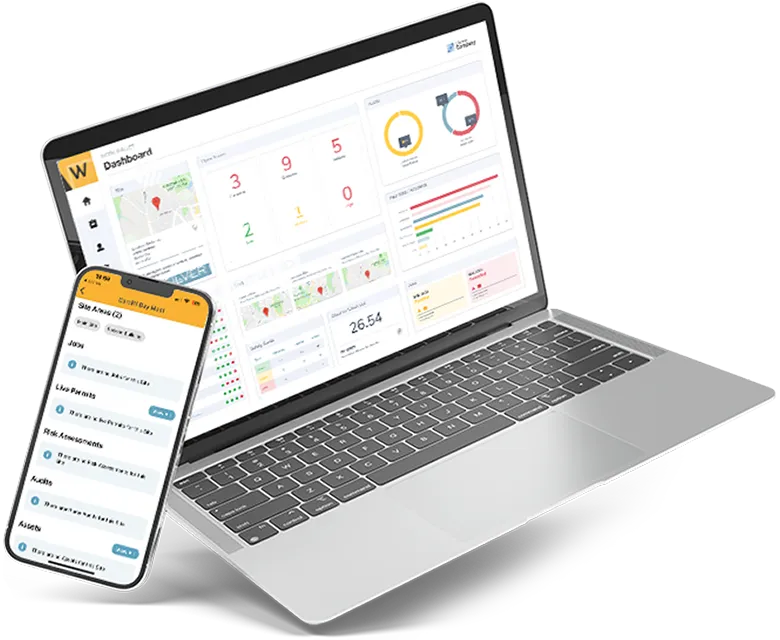
Digital permit to work systems strengthen this process through mandatory fields, electronic signatures, and automated audit trails. As a result, organisations eliminate many common failures associated with paper-based systems.
For example, digital workflows prevent permits from remaining open indefinitely. They also reduce the risk of backdated signatures and ensure teams review hazard assessments before approval.
Rather than relying on copied information from previous permits, teams work from current, task-specific data. Consequently, organisations improve accountability, strengthen compliance, and maintain greater control over high-risk activities.
Get Started
Join the 10,000+ companies that grow with Work Wallet every day - trusted to simplify operations, boost safety, and keep teams connected.