
Identifying the problem
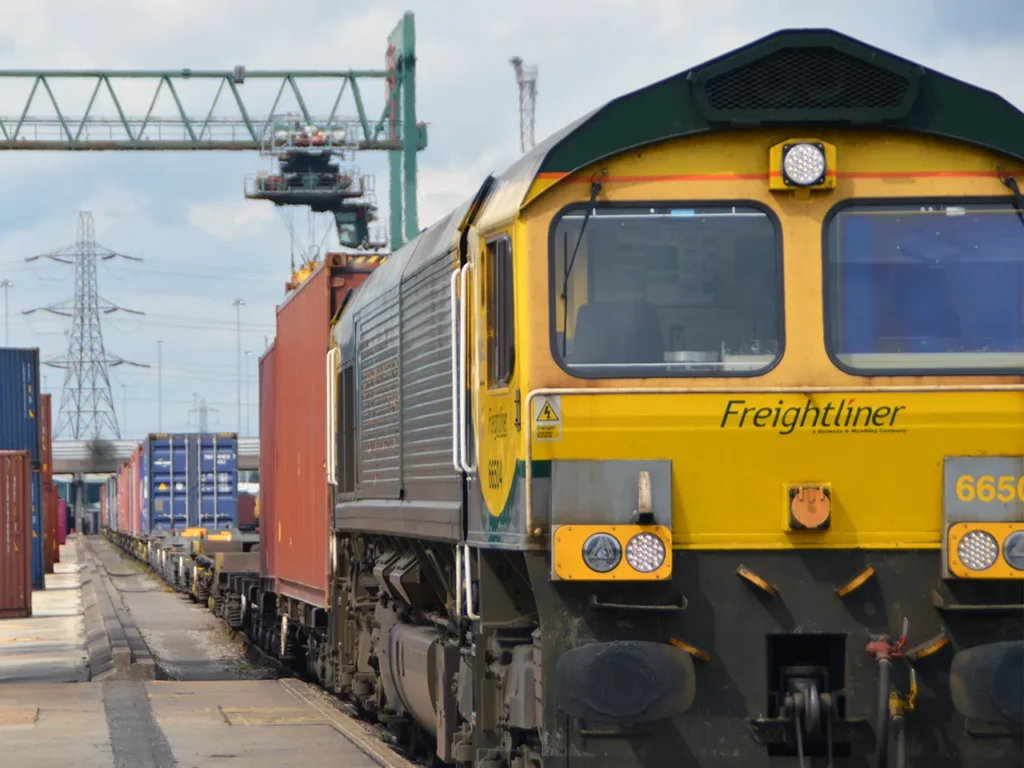
In such a busy environment, health and safety needs to be a top priority. Freightliner Southampton identified that its traditional paper-based briefing processes were inadequate. This meant employees and site visitors could miss essential safety information. Sometimes information could take too long to share, making it out of date.
With a mix of extremely large and heavy plant equipment on site too – including trains, cranes and reach-stackers – equipment failure is not an option, from both safety and operational productivity perspectives. Freightliner Southampton needed a way to speed up asset inspections, keep better track of maintenance issues, and schedule repairs.
Finding the Solution
Embracing paperless working, Freightliner Southampton reviewed and trialled the diverse options available on the market to digitise its health and safety processes. After detailed comparison with competing platforms, they identified Work Wallet as the system that would benefit Freightliner the most.
In particular, they wanted a system with easy-to-use and simple-to-learn interfacing, which could be rolled out at the depot quickly and with minimal fuss, and remove the need for paper files. Employees also needed to be able to manage processes from the site office or use it on-the-go on the depot floor, with seamless communication between the two that would help build a stronger safety culture.
The flexibility to choose specific modular solutions as required, from the wider suite of Work Wallet products, at an affordable price, was a big bonus.
Delivering the Outcome
Freightliner Southampton now uses Work Wallet to deliver its safety briefings instantly, and to monitor and track responses and acknowledgements of its key messages. Messages which could have previously taken hours to filter through to employees now reach them in a matter of seconds, and Shane can see they have been received and understood.
Employees out on site at the depot are able to check the assets they use more easily. Each asset has a designated QR code that can be scanned with a smartphone or tablet, allowing it to be verified as fit for use after a physical inspection. Users can also report defects in real-time for repair or rectification, and assets can be scheduled for regular maintenance more easily with built-in alerts. Hear how Freightliner did it across every part of their operation.
