Health and Safety in Construction

Safety isn’t optional in construction; it’s essential. With high-risk environments, heavy machinery, and a fast-paced work culture, the construction sector remains one of the most hazardous industries in the UK. That’s why health and safety in construction must be managed with precision, consistency, and real-time oversight.
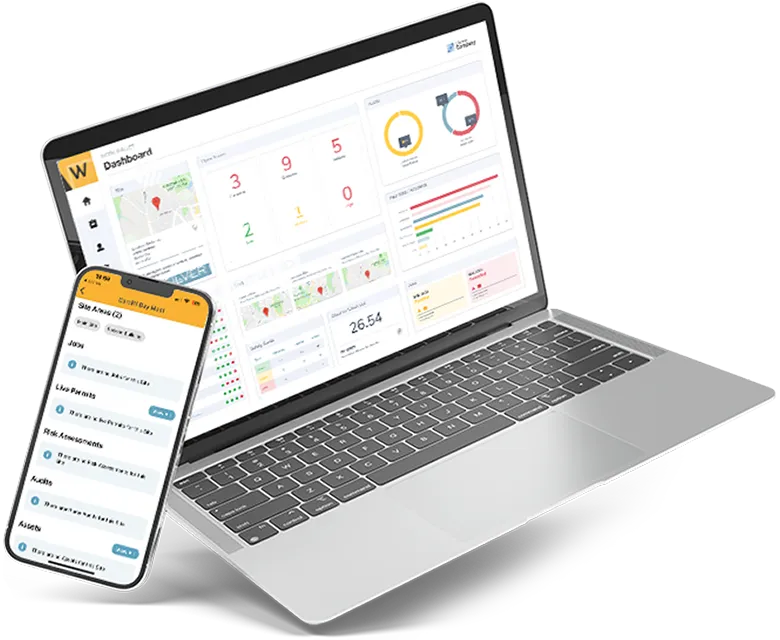
We understand the daily pressures construction teams face. That’s why Work Wallet simplifies health and safety management from the ground up.
It helps businesses meet legal requirements while keeping teams safe, productive, and focused on delivering great work.
What Does Health and Safety in Construction Involve?
Health and safety in the construction industry revolves around a set of practices designed to minimise accidents, injuries, and long-term health issues on site. At the heart of this is the Construction (Design and Management) Regulations 2015 (CDM 2015), a crucial piece of UK legislation that sets out clear duties for clients, designers, contractors, and workers.
CDM 2015 encourages better planning and cooperation across every phase of a construction project, ensuring that risk is considered from design to completion, creating safer environments for everyone involved.
Work Wallet helps you manage these regulatory responsibilities more effectively through smart, digital tools that simplify every safety process.
It streamlines tasks such as risk assessments, site inductions, and compliance checks, all easily accessible on your phone or tablet.
The Importance of Construction Health and Safety Compliance
Remaining compliant with health and safety regulations is more than a legal requirement. It is a business-critical function that impacts your people, reputation, and bottom line.
The Health and Safety at Work Act 1974 states that all employers must protect the health, safety, and welfare of their employees and others affected by their operations. In the construction industry, where serious injuries and fatalities are all too common, this duty of care takes on even greater urgency.
Construction businesses that fail to meet compliance standards risk severe financial penalties, project delays, reputational damage, and even imprisonment. More importantly, they endanger lives. That’s why investing in robust health and safety processes is not just the right thing – it’s essential for long-term success.
Common Risk Areas in Building and Construction Sites
Adequate construction site safety requires a thorough understanding of the risks involved in daily operations. Some of the most common hazards include:
- Working at height remains one of the leading causes of fatalities in the construction industry. Falls from ladders, scaffolding, and roofs can often be prevented with proper planning, training, and the use of fall protection systems.
- Hazardous materials such as asbestos, silica, and lead must be handled according to strict COSHH regulations. Ensuring correct storage, use, and disposal can significantly reduce health risks.
- Machinery and equipment safety is another critical area. Construction sites use heavy-duty machines and power tools, which require regular inspections, training, and transparent operating procedures.
- Manual handling injuries are also prevalent. Lifting and moving heavy loads without appropriate technique or equipment can lead to long-term musculoskeletal disorders.
- Site security and signage play a crucial role in preventing accidents. Unauthorised access, poor lighting, and unclear safety instructions all contribute to increased risk on site.
With Work Wallet, you can manage risks more effectively using intelligent safety workflows, digital audits, real-time reports, and automated compliance alerts.
How Work Wallet Supports Safer Construction Sites
Managing health and safety in construction is challenging, especially across multiple projects, teams, and contractors. Work Wallet simplifies this process by offering a centralised, mobile-first platform for all your safety and compliance needs.
We design our features for the real-world challenges of construction, ensuring they’re practical, adaptable, and easy to use:
- Real-time risk assessments and method statements
- Digital permits to work, accessible from mobile devices
- Incident and near-miss reporting, complete with photo evidence
- Geo-location and lone worker checks, improving response times and visibility
- Audit and inspection tools that help identify trends and highlight areas for improvement
By using digital tools, construction teams can spend less time on paperwork and more time on proactive safety management.
Building a Strong Safety Culture in Construction
Compliance is not just about ticking boxes; it’s about building a safety-first culture where everyone understands their role and responsibility. This means engaging your workforce, encouraging open communication, and reinforcing good practices daily.
Work Wallet makes it easier to:
- Share safety briefings and toolbox talks
- Reward safe behaviours
- Track individual training and certification records
- Capture feedback directly from workers on-site
The result is a safer, more productive site where every task naturally supports compliance and accountability.
Get Started with Work Wallet
Whether overseeing a large construction project or managing multiple smaller sites, Work Wallet provides the digital infrastructure to keep your health and safety management compliant, connected, and in control.
Get Started
Join the 10,000+ companies that grow with Work Wallet every day - trusted to simplify operations, boost safety, and keep teams connected.